Heritage vision helps shape a shared future










Editor's note: During the third Liangzhu Forum on Revitalization of Civilization: Cultural Heritage and Human Cultural Diversity held in Hangzhou, Zhejiang province, from Oct 18 to 20, Tim Winter, a professor and research leader at National University of Singapore's Asia Research Institute, spoke to China Daily on China's contributions to global heritage protection and cross-cultural collaboration under the Belt and Road Initiative. Below are excerpts from the interview. The views don't necessarily represent those of China Daily.
Since 2013, the Silk Road has emerged as a vast platform for cooperation across heritage sectors, including museums, festivals, intangible culture, maritime heritage and world heritage. Together these efforts have contributed to a form of civilizational revival and dialogue that spans oceans and continents.
World heritage is underpinned by the concept of "outstanding universal value". Beyond this global importance, heritage sites also tell other stories about their value to society today. Conservation is therefore not only a technical process but also a form of storytelling — a way through which nations articulate their identity and relationship with history.
Throughout the world, countries make decisions about conservation to tell stories about national identity and define what "national heritage" is. In China, the prevailing story has become one of civilizational revival — a narrative communicated not only through museums but also through the ways heritage sites are conserved.
The impact of Chinese civilization has been global, and the Silk Road is a powerful platform for telling that story to public audiences. Today, China is making rapid progress in the field of conservation. It is undoubtedly Asia's leading force in heritage conservation and arguably now leads the world in museum and conservation technology.
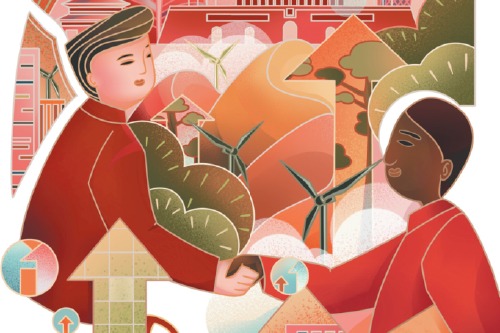
As the Belt and Road civilizational revival continues, careful thought needs to be given to the power of international conservation collaborations. Laos, Kenya, Myanmar, Kyrgyzstan, Egypt and Pakistan are among the Belt and Road partner countries that would greatly benefit from the expertise and resources China has developed in recent decades.
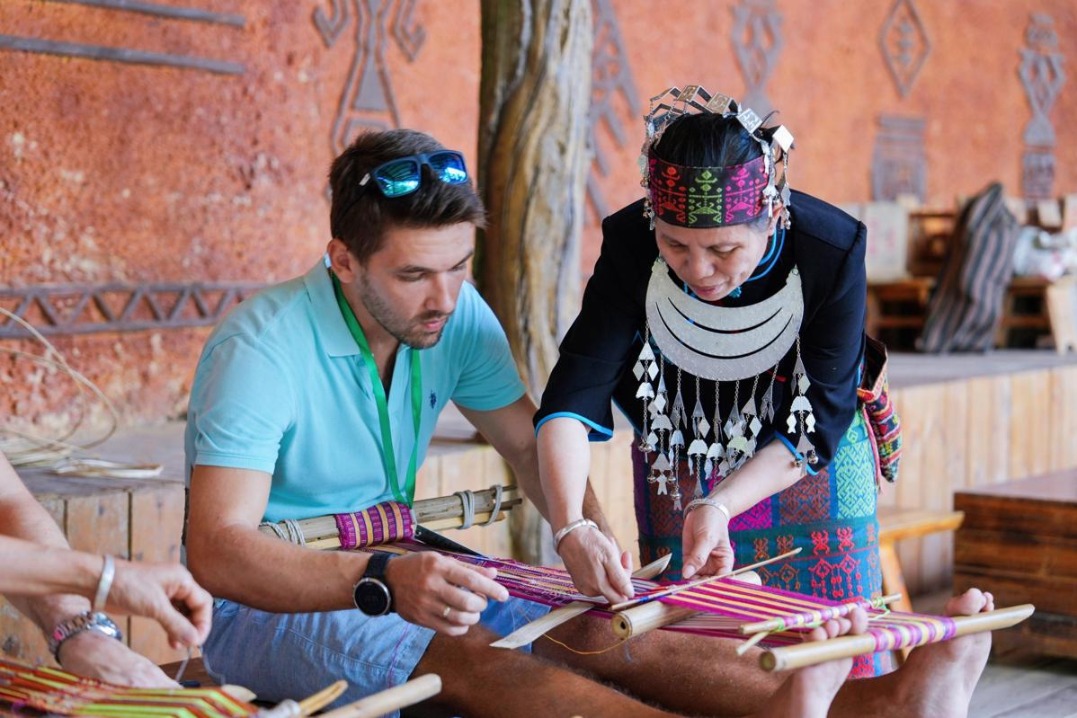
Conserving World Heritage sites is far more than a technical process. It is about crafting stories about the past. As these ambitious declarations of civilizational revival advance, we need to address the sensitivities in each context. Not all countries, particularly smaller ones, see themselves in civilizational terms. We therefore need to consider heritage as a form of cultural revival that recognizes different views of heritage and fosters dialogue that is mutually respectful and productive.
This is what President Xi Jinping means when he states that "we advocate the importance of inheritance and innovation of civilizations. Countries need to fully harness the relevance of their histories and cultures to the present times, and push for creative transformation and innovative development of their fine traditional cultures".
There are many examples where inadequate infrastructure has undermined the conservation of World Heritage sites. With its commitment to the revival and development of places of outstanding natural and cultural value, China is well placed to meet these challenges. The Belt and Road Initiative has increased the likelihood of new infrastructure and tourism projects coming up around heritage sites in countries that lack the necessary resources to adequately respond.
China has a distinct opportunity to address the relationship between culture, infrastructure and development, particularly given the recent decline in funding streams in this area from the United States and Europe. World Heritage is a sector where the Global Civilization Initiative and the Global Development Initiative can evolve as overlapping policy architectures.
World Heritage is more than nominations and technical preservation. It involves cultural, social and developmental issues which, if addressed properly, will allow China to contribute toward cultural and civilizational revival in an increasingly divided world.