China assumes key role in global governance reform










Editor's note: Rising protectionism and unilateralism have plunged the global governance system into a state of flux and uncertainty. Liao Fan, director of the Chinese Academy of Social Sciences' Institute of World Economics and Politics, spoke to the 21st Century Business Herald on the urgent need for reform in the global governance system to make it more fair, inclusive and effective. Below are excerpts from the interview. The views don't necessarily represent those of China Daily.
Global trade faces three major challenges. First, the rise of unilateralism and protectionism has intensified trade frictions and undermined the effectiveness of multilateral trade rules. Second, emerging economies are struggling to strike a balance between debt distress and weakening external demand, highlighting the deepening imbalance in global development. Third, the widening digital divide and the rapid advance of technologies risk reinforcing the first-mover advantage of developed economies, further increasing the differences in the international division of labor.
Yet the new era also presents significant opportunities. Digital technologies and the green transition have created new engines for growth in trade, with digital services and new energy becoming the most dynamic sectors. Regional economic cooperation continues to deepen and innovative technologies are expected to contribute more than one-third of the growth in global trade over the coming decades.
The future trajectory of the global trading system will be shaped by the strategic choices that countries make between openness and isolation, and between confrontation and cooperation. Only by adhering to multilateralism, strengthening cooperation on digital infrastructure and advancing inclusive development can the international community build a mutually beneficial trade landscape.
When it comes to reform in the international economic governance architecture under the UN framework, China can play a pivotal role as a constructive leader, a consensus builder and a practitioner of reform. China provides momentum for reform by promoting inclusive development within the governance system. It continues to support quota and voting power reforms at the International Monetary Fund, the World Bank and other core institutions so that they better reflect the realities of today's global economy. The country's commitment to enhancing the representation and voice of the Global South strengthens the legitimacy and effectiveness of the global governance system.
China also contributes workable solutions that help bridge global governance deficits. It has proposed initiatives that are not intended to replace existing frameworks; rather, they complement and improve them, offering more comprehensive conceptual tools and practical approaches to address global challenges.
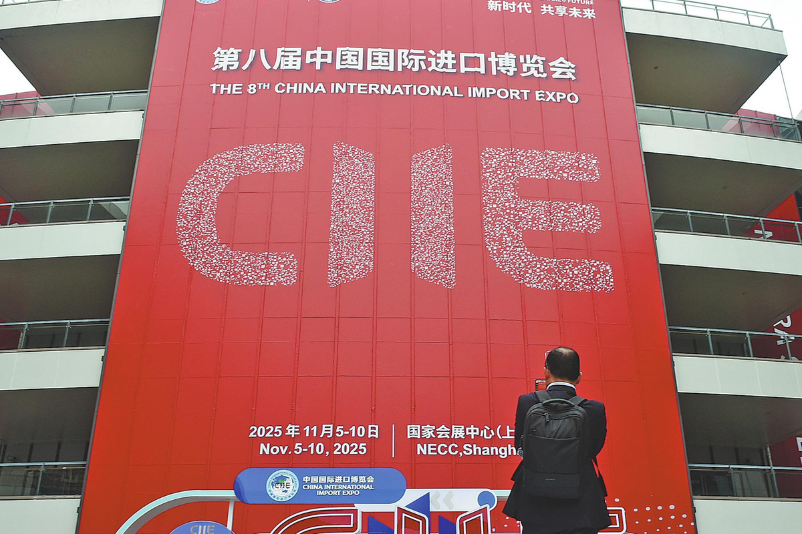
China's commitment to openness is a concrete demonstration of cooperation. It is not only supplying global public goods but also testing new models of international cooperation. Its practical experiences offer valuable examples for the reform of the global economic governance system.
Greater openness is a key driver of China's economic transformation and upgrading. It is actively attracting high-end global resources and enabling domestic industries to enhance efficiency through competition. Foreign enterprises operating in China bring not only capital and technology but also strengthen innovation ecosystems through supply chain collaboration.
Meanwhile, expanded openness spurs deeper domestic reform, helping build a more transparent and rules-based regulatory system and fostering a fairer and more competitive market environment. China's openness lends stability to the multilateral trading system. It is also creating new channels for developing countries to integrate into global value chains, enhancing the inclusiveness of global trade.
This dual approach meets China's internal need to shift from high-speed to high-quality growth, while also benefiting the world by expanding its import market and providing global public goods.