



Nation's underwater archeology uncovered
The passionate people behind China's search for submerged treasure trove of rich maritime relics









Sunken legacy
A pivotal moment in China's underwater archeology came in 1987 when Cui was tasked with cataloging 247 artifacts from a sunken Southern Song Dynasty (1127-1279) commercial ship.
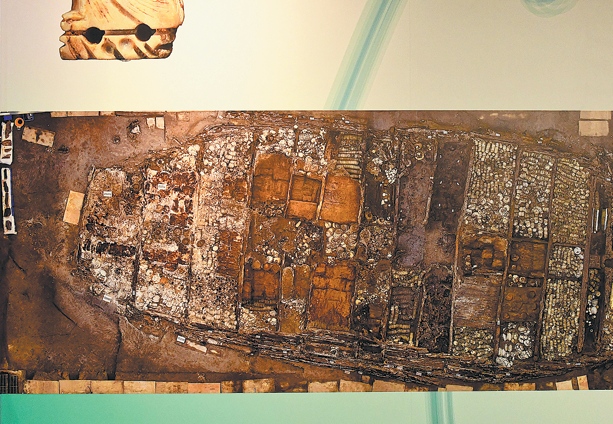
More than 800 years ago, a merchant vessel laden with goods left Quanzhou Port, bound for the Indian Ocean. Tragedy struck when it went down in the seas off Guangdong province, lost to time until it was discovered during a joint Sino-British search in 1987. The ship, now known as Nanhai One, has since captured imaginations with decades of ongoing archaeological work.
Submerged ships and their contents, once isolated from the air, can be remarkably well-preserved, creating enigmatic sites of underwater heritage. However, the vastness of the ocean floor remains largely unexplored due to human physiological limits and the rudimentary technology of earlier times.
With the breakthroughs in diving technology, terrestrial archaeology has, naturally, extended underwater.
"In the early days, a few countries, mainly developed nations like Japan, the United Kingdom, the United States and France, had been involved in underwater archaeology," Cui said.
The 1990s saw budding interest in underwater archaeology within China, with the Nanhai One project prompting collaborative efforts with British and Japanese experts. Despite several attempts, the ship's recovery remained elusive, further complicated by financial constraints that halted the project.
But, help came from across the waters in Hong Kong.
In 1999, Cui and several colleagues were invited to conduct underwater archaeological surveys in the city where they chanced upon businessman Chan Lai-fak who ran a diving equipment company. "It was shortly after Hong Kong's return to the motherland, and they all wanted to do something for the country," said Cui.
A year later, armed with a vessel, diving equipment and HK$1.2 million ($154,000), Chan stepped forward as the project's pioneering angel investor. "It was our last stand, a final roll of the dice," said Cui.
Chan's unwavering optimism had offered a ray of hope as the team's resources dwindled. At the eleventh hour, Cui's discovery of crucial artifacts unveiled Nanhai One's elusive resting place, validating Chan's faith and foresight.
"Life's ledger can be tallied in two ways," said Chan. "One is tangible where 1+1 neatly equals two. The other is intangible, measured by the heart. And if you do one thing right in your lifetime, that's live a life without regrets."
A quarter of a century on in summer last year, the businessman beamed with pride at the sight of the unmanned search vessel undergoing maintenance. He walked around it, marveling at the rapid pace of technological advancement and the new era it has heralded for today's underwater archaeologists.


- Former China Mobile Internet chief under investigation
- Taiwan forum hears calls for protection of resistance war history
- Guangdong power company trains robots for key tasks
- New garden unveiled to celebrate Shanghai-Hamburg friendship
- Shanghai airport sees Thai visitor surge for Songkran Festival
- Chinese study sheds light on Kawasaki disease treatment


