BIZCHINA> Wen's Lens

|
BIZCHINA> Wen's Lens
|
|
Related
Same challenge, new tools
By You Nuo (China Daily)
Updated: 2008-06-02 17:16
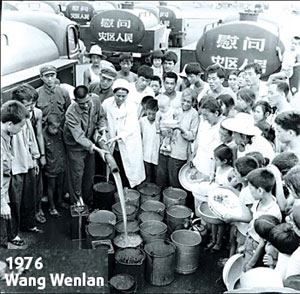
Our photographer Wang Wenlan left the black-and-white photo you see here for me the day before he went to the Sichuan earthquake disaster zone. Once again, the picture is about the 1976 Tangshan earthquake. And the purpose is to compare the two as victims today attempt to make a fresh start. By the time this article is written, Wang should be in Chengdu, if not closer to the May 12 epicenter, as the only photojournalist to document the two worst earthquakes in modern Chinese history. By then, the China Daily should have a total of six photographers on the rescue frontline, joined by an equal number of reporters. The whole team is at least three times larger than any China Daily mission to cover any foreign visit by a Chinese head of state. The photography team is even larger than the ones covering an annual session of the National People's Congress, the Chinese parliament. But emergency assignments are not unique to journalists. In many professions in China, it has never seemed strange to people that, now and then, some colleagues, or even themselves, will leave their regular teams to be recruited by a government-mobilized relief effort in some distant area, be it a flood, a storm, or a killer earthquake.
The army, medical staffers, the engineers specializing in relief work, and operators of special machinery and vehicles enlisted for delivering relief materials are the most likely to be dispatched to disaster areas. If it is a major crisis, the relief team will swell very quickly to be joined by people doing more specific jobs. For residents of the disaster zone to restore their normal lives, other than proper medical protection, nothing can be more important than the timely supply of daily necessities. In 1976, as seen in Wang's historical picture, what could be mobilized were just some very basic and simple things - like a truck fleet carrying tanks of fresh water for Tangshan's residents. But water is crucial to nourish lives. It would be particularly so, as Wang explained when he handed me the photo, because following a major quake, the disaster zone's water resources can become unsafe and even dangerously polluted by the debris of old buildings and dead animals. Now, it is a different China tackling nature's same terrifying challenge. Just as Wang is no longer lugging his old mechanical film camera on his reporting mission, but a few advanced digital sets imported from Japan, here is a country that is capable of giving and buying many more necessities, tools and services for its people. The color photograph, about distributing bottled water in the quake zone, was taken by Gao Erqiang, our photographer who is otherwise based in Shanghai to cover the events and styles in this most affluent city in the Chinese mainland.
(For more biz stories, please visit Industries)
|
安西县| 阿拉善左旗| 盘山县| 同心县| 荃湾区| 韶关市| 淄博市| 漾濞| 鄂尔多斯市| 西丰县| 葫芦岛市| 遂宁市| 顺平县| 鲁山县| 尼木县| 玛纳斯县| 肇源县| 高唐县| 廉江市| 揭阳市| 桂东县| 灯塔市| 偏关县| 南丰县| 天镇县| 南雄市| 体育| 湘阴县| 宁武县| 仁怀市| 读书| 左权县| 丰都县| 扶沟县| 平顶山市| 清镇市| 凤翔县| 保德县| 东宁县| 龙江县| 秦皇岛市|