BIZCHINA> Top Biz News

|
BIZCHINA> Top Biz News
|
|
Avoid risky derivatives, SOEs told
By Li Fei (China Daily)
Updated: 2009-05-08 07:57 State-owned enterprises (SOEs) should proceed cautiously in overseas derivatives trading in order to minimize the potential risks, and the government should make efforts to develop the domestic futures market to accommodate these companies' risk hedge needs, regulators and experts said. The government has become increasingly concerned about the financial derivatives trading by large State-owned enterprises after some of them incurred huge losses.
The move came after several high-profile State-owned companies such as the country's flagship carrier Air China and shipping giant China Cosco Holdings reported massive losses on derivatives. At present, 28 State-owned companies under SASAC supervision are involved in financial derivative trading, and a majority of them suffered losses, Li Wei, SASAC's deputy director, said in a statement without disclosing other details.
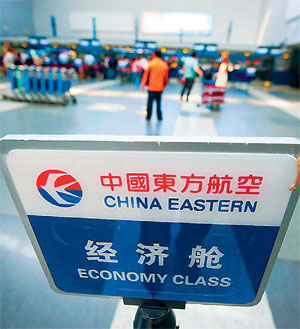
"This has posed serious threat to companies' sustainable operations and also endangered state assets," Li said. He added that his agency would conduct a thorough review of State-owned companies' investment in financial sectors this year and work out the relevant policies based on the investigation. SASAC has also urged local State asset watchdogs to take similar moves to better supervise local State-owned companies. Li said companies should use derivative instruments as a tool to hedge risks "but not as a means to gain profit", and should never be engaged in speculative trading. "If companies do not use derivatives as a tool for hedging risks and use its price-discovery functions, they will be in a disadvantaged position amid cut-throat international competition," Li said. State-owned companies, Li said, must meet strict requirements like getting prior approval along with tight risk-control mechanisms, before being qualified for derivatives trading. Many of the companies were conducting derivatives trading without prior approval, Li said. The government should accommodate the rising demand for derivatives trading by these companies if it needs to reduce the huge risks involved in overseas derivative instruments, experts said. Many Chinese firms were trading in derivatives abroad in the past two years, often without government approval, partly due to lack of tools for hedging risks in the domestic market, Li Fuan, director of innovation supervision at the China Banking Regulatory Commission, told a financial conference recently. Financial institutions, Li said, should develop more derivative products to meet the demand but they should be more transparent in risk disclosure. "Efforts should also be made to develop the domestic futures market to allow companies the chance to hedge their business risks," said Hu Yuyue, futures professor, Beijing Technology and Business University. "Otherwise companies will be forced to take chances in overseas derivative markets," he said. Air China lost 7.47 billion yuan in aviation fuel hedging contracts. China Eastern Airlines lost 6.2 billion yuan in aviation fuel hedging contracts. China Cosco Holdings Co, the world's largest operator of dry-bulk ships, lost 3.95 billion yuan from wrong-way bets on freight rates as of Dec 12, 2008. (For more biz stories, please visit Industries)
|
孟津县| 林西县| 林周县| 万州区| 永宁县| 柞水县| 汉阴县| 乌鲁木齐县| 祥云县| 芜湖市| 太白县| 慈溪市| 肥西县| 平原县| 临邑县| 明水县| 山西省| 隆尧县| 陆川县| 阳西县| 崇仁县| 宣武区| 景德镇市| 济南市| 萨迦县| 长春市| 尼玛县| 体育| 武强县| 洪泽县| 咸丰县| 留坝县| 瑞丽市| 江达县| 田林县| 达拉特旗| 陆川县| 万山特区| 陵水| 汉沽区| 策勒县|