Trade balance possible next year
Updated: 2011-08-23 09:12
By Hu Yuanyuan (China Daily)
|
|||||||||||


|
 |
|
State Councilor Dai Bingguo (second right) meets former UN under secretary-general Akashi Yasushi, the leader of the Japanese delegation to the 7th Beijing-Tokyo Forum, on Monday. Wang Chen (third right), minister of the State Council Information Office, and Zhu Ling (fourth right), editor-in-chief of China Daily, also attended the forum. [Photo / China Daily] |
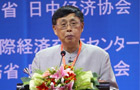
"Next year will be a critical period for China's trade, as the ongoing debt crisis in the EU and US reduces their demand while yuan appreciation and ever-increasing trade protectionism hit China's exports," Wei Jianguo, secretary-general of the China Center for International Economic Exchange, told China Daily on the sidelines of the 7th Beijing-Tokyo Forum.
While China's exports to emerging economies grow rapidly, they account for just one third of those lost to developed economies, Wei, who was also former deputy commerce minister, said.
"With exports declining next year and imports picking up, China may achieve a trade balance," he said.
He forecast China's trade surplus will decrease to less than $100 billion for 2011 from last year's $183 billion.
The annual rate of export growth to EU countries, Wei estimated, may even decrease to 10 percent for 2011.
"China's exports to the EU will grow 13 to 15 percent at most, as opposed to 22 to 28 percent last year," Wei said.
He attributed the decline to the ongoing debt crisis plaguing European countries. Currently, the EU is China's biggest trade partner, followed by the US and Japan.
As to the surprise rise in the trade surplus in July, Wei said it was due to predicted yuan appreciation.
"Exporters rushed to have the sales orders booked before appreciation," said Wei.
On Aug 11, the yuan went beyond 6.4 to the dollar for the first time in 17 years. The currency is expected to appreciate by 7 percent this year and another 5 to 7 percent next year, according to Wei.
China's trade surplus topped $31.5 billion in July, the highest level for two years, according to data released by the General Administration of Customs.
"It's hard to predict precisely how the global debt crisis will affect our exports in the long term, but the general picture is gloomy," said Wang Huidao, general manager of Hiking (Qingdao) International Trading Service Group Co Ltd, a subsidiary of Hiking Group, the largest foreign trade company in Shandong.
The company saw a "slight" increase in sales during the first six months, when set against last year's figures, but "the pressure for the second half is huge, and we have to prepare for difficulties over the next two to three years", Wang said.
Wei also raised his concerns regarding Germany, the largest economy in Europe and the "economic growth engine" of the euro-zone economy.
Germany's economy rose by just 0.1 percent in the second quarter after rising 1.3 percent in the first quarter.
Meanwhile, the surging cost of raw materials and growing trade protectionism also hit Chinese exports.
"I expect that trade protection lawsuits targeting China will exceed 100 this year and next," Wei said, adding that more lawsuits will also be initiated by emerging economies.
Exports may be facing tough times but imports will continue to grow, backed by government support.
A number of ministries are jointly working on a package of measures to support imports in key categories, especially those that contribute to a green economy, Wei said.
China's trade volume hit $318.9 billion in July, a year-on-year increase of 21.5 percent while the volume of imports climbed 22.9 percent year-on-year to $143.6 billion.
Yao Jian, spokesman of the Ministry of Commerce, said in June that China would further reduce duty on imported goods, including luxury goods, to stimulate consumption.
For Ken Peng, senior China economist with BNP Paribas, a trade surplus will help address China's $3.2 trillion foreign exchange reserves dilemma.
"If the country's foreign exchange reserves continue to grow at a rapid pace, there is little chance of getting out of the cycle," Peng said. "You have to do something with the accumulated dollars."