|
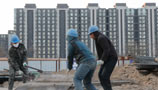
 Zhang Qingyuan, a resident of one of the apartment buildings where the local government built homes for former miners and farmers as part of an urbanization program, shows a traditional dance which he practises during a recreational activity, Feb 28, 2013. [Photo / Agencies] |
Currently, China lacks a properly functioning municipal bond market and is only just developing high-yield bonds, both of which would be needed to attract the investment capital sought.
And Beijing's qualified foreign institutional investor (QFII) rules stop dedicated overseas bond funds participating in the market by insisting as much as half the money they plan to invest goes into equities.
Boosting consumption
In the face of slowing exports, the government wants to raise domestic consumption's share in the economy to close one of the world's widest gaps between rich and poor and quell discontent among those Chinese who feel they missed out on blistering economic growth of the past three decades.
The economy picked up in the fourth quarter as a spurt of infrastructure spending orchestrated by Beijing broke seven straight quarters of a slowdown.
Consumption's contribution to growth, however, fell in the fourth quarter for the third straight quarter.
About 13 percent of China's population still live on less than $1.25 per day, the United Nations Development Programme says. Average urban disposable income is just 21,810 yuan ($3,500) a year.
Meanwhile, China has 2.7 million millionaires in dollar terms and 251 billionaires, according to the Hurun Report, known for its annual China Rich List.
Urbanization could cure China's economic imbalances, a study by consultants at McKinsey showed last November, putting it on a path to domestic consumption-led growth within five years to replace three decades of investment and export-driven development that stoked global trade tensions.
The government hopes 60 percent of its population of almost 1.4 billion will be urban residents by 2020, from about half now, and will build homes, roads, hospitals and schools for them.
But urbanization and market reform must go hand in hand, as simply adding to housing stock risks creating "dead cities", according to Xia Bin, a former adviser to the central bank and now head of the financial research institute at the State Council's think-tank.
A senior financial diplomat in regular contact with Chinese officials concurred.
"The focus should not just be on construction. They should also focus on creating a market," the diplomat said. "If they fail to create a market, they will end up with an urban poor much worse off than the rural poor."


Copyright 1995 - . All rights reserved. The content (including but not limited to text, photo, multimedia information, etc) published in this site belongs to China Daily Information Co (CDIC). Without written authorization from CDIC, such content shall not be republished or used in any form. Note: Browsers with 1024*768 or higher resolution are suggested for this site.
License for publishing multimedia online 0108263 Registration Number: 130349