The fourth quarter was the biggest contributor (32 percent) to the total fast-moving consumer goods sales for the year — thanks to the concentration of holidays such as Christmas and New Year, as well as traditions including the Singles' Day shopping spree.
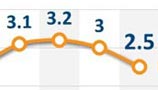
But the slowdown in GDP growth over the past few years was felt in China's retail market in 2013, with the growth of national retail sales declining across most segments. Sales of fast-moving consumer goods also slowed to single-digit growth in the fourth quarter and closed at 7 percent year-on-year growth for 2013, compared with a much brisker 15 percent in 2012.
"It's a challenge, but also an opportunity backed up by the strong willingness to spend among Chinese consumers," Dodd said. "The key to getting out of the doldrums lies in identifying new demand based on the consumers' changing needs and shopping behavior, and exploring the new frontiers that have not yet been tapped."
As 2014 unfolds, a brighter outlook is expected. The key challenges are translating this confidence into actual purchasing power and improving the domestic consumption's contribution to the GDP by creating more demand through deeper understanding of Chinese consumers, according to Dodd.
Meanwhile, based on a set of criteria that include local GDP growth, the population, retail sales size and the trade development index, a few second- and third-tier cities — such as Xi'an, Chongqing and Suzhou — are expected to become the emerging tier-one cities in five years, according to Nielsen findings.
The second- and third-tier cities (as defined by Nielsen) include a total of 113 million households from 252 urban centers. Their combined household income is estimated to add up to 5 trillion yuan ($825 billion). In 2013, these two tiers contributed nearly half (44 percent) of the total sales of fast-moving consumer goods, 6 percentage points higher than in 2012.
Fifty-eight percent of newly opened stores across China were in the second- and third-tier cities, while more than half of the consumers in second-tier (62 percent) and third-tier (56 percent) cities reported shopping online within the past three months.
"With the deeper penetration of traditional and emerging channels, as well as the e-commerce channel to reach consumers of different kinds, we believe these cities will become the powerhouse of China's future economy," Dodd said.
Don't miss:
|
 |
 |
| China's top 10 richest cities |

Copyright 1995 - . All rights reserved. The content (including but not limited to text, photo, multimedia information, etc) published in this site belongs to China Daily Information Co (CDIC). Without written authorization from CDIC, such content shall not be republished or used in any form. Note: Browsers with 1024*768 or higher resolution are suggested for this site.
License for publishing multimedia online 0108263 Registration Number: 20100000002731