Historic visit resonates beyond nation's borders
Updated: 2014-07-05 06:56
By Wu Jiao (China Daily)
Comments Print Mail Large Medium Small
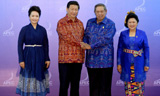
While President Xi Jinping and his Republic of Korea host Park Geun-hye exchanged laughter and oversaw the signing of a number of deals to cement relations, the bilateral meeting was really a conference of five protagonists, with the Democratic People's Republic of Korea, Japan and the United States watching closely from afar.
In every sense, Xi's short visit to the ROK was a success for both countries and deserves much attention and analysis.
In less than 30 hours, Xi attended 13 events, and the two countries agreed on 12 deals.
Xi, with his wife, Peng Liyuan, also made headlines in the ROK because his visit reinforced the close bond between both countries.
Last year, approximately 8.2 million people from both countries made visits to each nation. The number between China and the United States reached approximately 4 million last year; between China and Japan that number was around 5 million.

Xi's visit sent strong signals to other nations, from an economic or political perspective. The DPRK, for example, took note of China's stance on the Korean Peninsula nuclear issue as well as the issue of Korean unification.
Xi and Park forged a consensus concerning the issue of denuclearization, the first time that two major participants of the Six-Party Talks have managed to reach a comprehensive consensus since the talks stalled.
For Japan, which is in fierce competition with the ROK in the high-tech and manufacturing sectors, China's greater business cooperation with ROK might mean each will be less dependent on Japan's industries.
China and the ROK also advocated a bilateral partnership in preserving regional peace, which would not only encompass preserving peace on the Korean Peninsula but also maintaining post-WWII order in Northeast Asia. Both China and the ROK were victimized by Japan's aggression during World War II.
The United States was also a careful observer of Xi's visit because the ROK is a key ally of the US.
Under the glaring spotlight, China and the ROK have been carefully weighing and designing their public statements concerning the DPRK, Japan and the US.
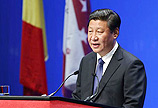
While there is hardly any mention of Japan in any official joint statement, Xi highlighted Japan's "barbarous" militarist past and the sufferings it brought to both China and the ROK in a speech in Seoul on Friday.
"When the war against Japan was at its highest pitch, the Chinese and Korean people shared in their suffering and helped each other with sweat and blood," he said.
The two nations announced they will jointly commemorate the 70th anniversary of the end of WWII next year, a move that elicited displeasure from Japanese Chief Cabinet Secretary Yoshihide Suga.
This consensus resonates in the wake of Japan's recent reinterpretations of its military policy, which marks a key change in Japan's pacifist stance and gives its military the right to go into battle in defense of allies.
(China Daily 07/05/2014 page2)