


Jiankou work starts to go deeper into layers of history










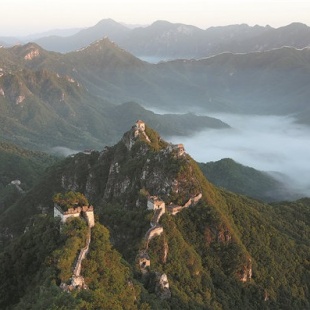
A new round of restorations of the Jiankou Great Wall in Beijing's Huairou district kicked off on Friday, marking a significant milestone in the ongoing conservation efforts of this historical marvel.
The section stretches about 7,800 meters and has gone through four rounds of restoration since 2016, with a substantial 4,250 meters already revitalized.
The latest restoration project involves 915 meters of the Jiankou section, including six watchtowers and five sidewall sections. The project is scheduled for completion by the end of November 2026.
The project is in the wake of an archaeological study that started in April. The archaeological work was carried out from west to east, incorporating methods that involved the participation of multiple disciplines to present in detail the historical information of this section of the Great Wall, according to Shang Heng, an associate research fellow at the Beijing Institute of Archaeology.
More "technological archaeology "methods were employed this time, involving botany, zoology, materials science, metallurgy and environmental science, Shang says.
"For example, in the field of environmental science, the excavation of the deeply buried soil around the watchtowers will help restore the historical environment and study the varieties and conditions of the vegetation that existed, thus providing a scientific basis for future vegetation management on the Great Wall," Shang explains.
At the same time, to avoid long gaps between archaeological work and restoration, the project employs a coordinated archaeology and restoration approach, ensuring both processes proceed in sequence.
Lyu Yan from the institute has been in charge of environmental archaeology for the project. She has taken small samples of mortar from the brick joints and is working on analyzing their constituents.
Lyu has engaged in Great Wall studies over the years and has found the formation of mortars varies by location on the Great Wall.