


Literati taste
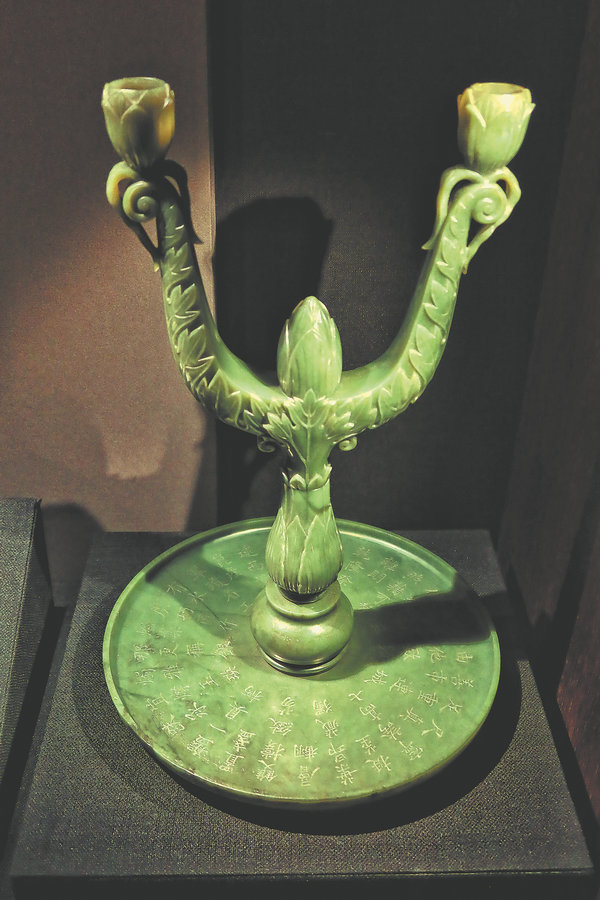
From 1761 onward, Hetian Jade was a presence at the Qing court in the form of biannual tributes in spring and autumn, and became the main type of jade used in the imperial palace, Huang explains.
"The production and use of jade ware underwent a huge advance, sparking another development boom in Chinese jade culture," she says.
As the exhibition shows, Qing imperial jade ware was elegant and refined and became a ubiquitous element in the places scholars worked.
"Jade stationery varies in style," Huang explains. "Some of the pieces were intricately adorned but some were aesthetically restrained. They are emblazoned with decorative motifs that convey a sense of grace."
Representations of six famous intellectuals from the Tang Dynasty (618-907), including renowned poet Li Bai, were carved on a jade writing brush holder to illustrate their daily indulgence in wine, song, poetry, and painting. Qianlong added an inscription to the holder in 1795, whether coincidentally or not, the year he relinquished the throne to his son to devote himself to a retirement of study.
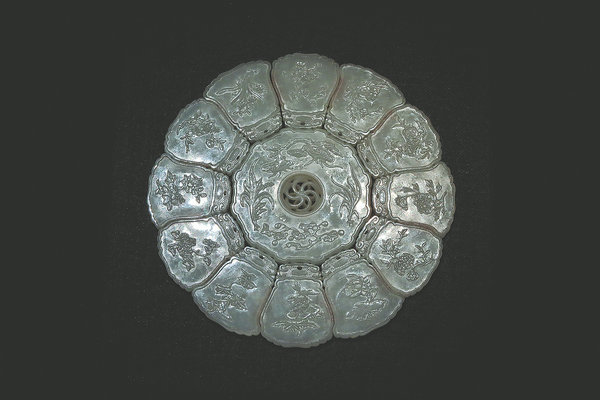
"During the reign of Qianlong, reverence and admiration for antiquity took deep root among the literati," the curator explains. "The emperor himself commissioned numerous archaic jade pieces. … It reflected his pursuit of moral refinement, artistic mastery and a deep connection to the wisdom of ancient sages."
Hetian Jade duplicates of ancient bronze artifacts were produced in abundance for Qing royals. One such example is a dark green jade vase with a fish-waterfowl design on display, the original of which dates back to the Han Dynasty (206 BCAD 220).
As Confucian ideology deeply influenced the values of scholars, people began to attribute gentlemanly benevolence, righteousness, propriety, wisdom and faithfulness to the stone, inspiring the saying that "a gentleman never parts with his jade".
Hetian Jade articles of daily use, including dining vessels, chess pieces and perfume bottles also added a touch of class and elegance to the gentlemen of the court. The fashion reached its peak around 1780 as Emperor Qianlong celebrated his 70th birthday. "After all, jade adornment embodied the pursuit of beauty," Huang says.





