A celebration for a time of promise
Spring Festival enjoys a growing global profile with recent UNESCO heritage recognition. Zhao Xu explores the cultural roots of this age-old tradition and how it has evolved over time.










Emotional bond
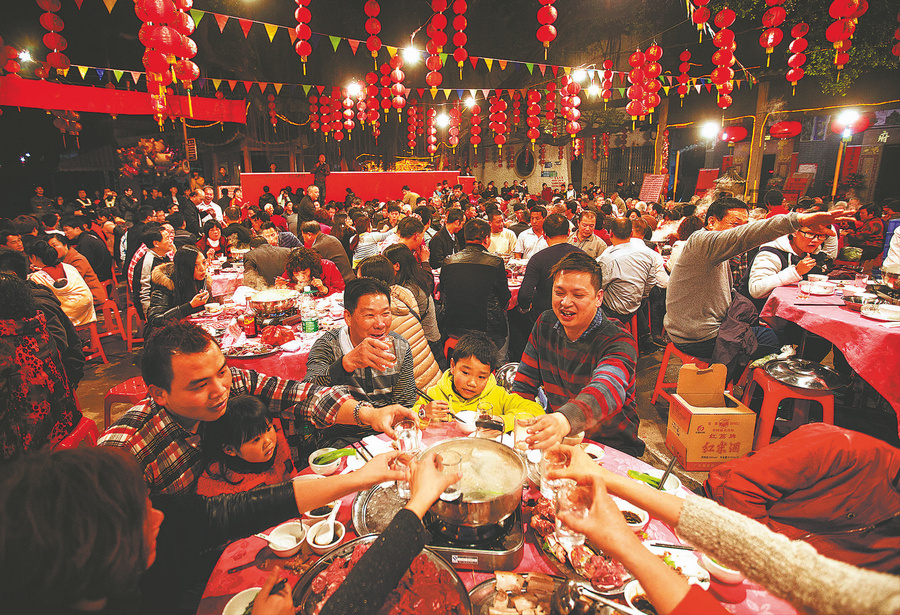
An indispensable part of this phenomenon is tuan yuan fan, or "the reunion feast", shared by all family members on Chinese New Year's Eve.
In many parts of northern China, this celebration includes eating dumplings — round, palm-sized dough wrappers filled with minced ingredients and shaped like ingots, symbolizing wealth. Occasionally, a coin is hidden inside one of the dumplings, promising extra luck to the fortunate diner who discovers it.
Yet, it is the making of dumplings that truly brings the family together on an emotional level.
Scattered across the vast country, many family members may not have seen one another for an entire year. As they gather around the table to knead, roll, and fold the dough, conversations flow, banter sparks, and laughter fills the room. Personal stories — both triumphs and travails — are shared, and fond memories of the past resurface, while dumplings are taking shape in their hands.
For the Chinese, Spring Festival is the heartbeat of connection, a time to rekindle bonds strained by the rush of life.
The first days of the New Year are spent visiting family, friends and associates, each gathering contributing to the vibrant tapestry of relationships that lies at the core of Chinese existence.
In southern China, rice cakes, known as nian gao — which sounds like "year high" in Chinese — are a staple of Spring Festival, symbolizing progress for the coming year. They are complemented by tang yuan, glutinous rice balls with a sweet flavor that embody the joy of family togetherness.
Then there are Spring Rolls — golden, crispy dough wrappers encasing a delightful mix of vegetable sprouts — and fish, a dish whose name shares the same pronunciation as a Chinese character symbolizing surplus and abundance. Interestingly, on New Year's Eve, the head and tail of the fish are often left uneaten, symbolizing the wish for a good start and end to the coming year.